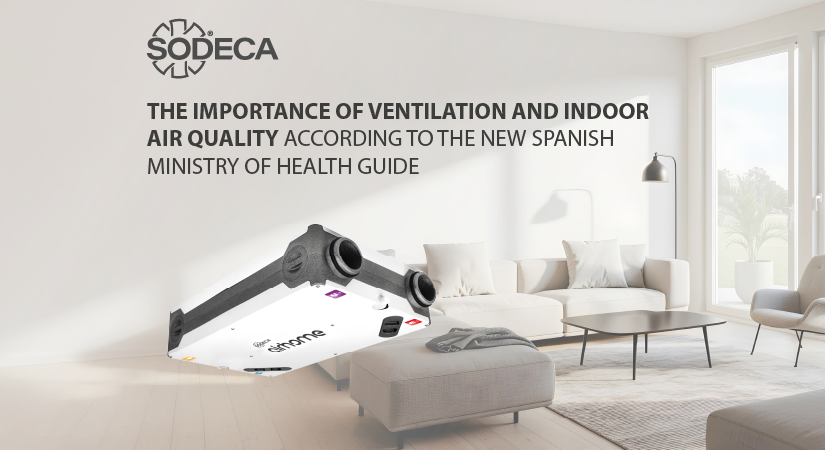
Factors such as pollution reduction and energy efficiency have reinforced the importance of designing ventilation systems capable of ensuring healthy and safe indoor environments while meeting regulatory requirements.
The Guide on Indoor Environmental Quality, published by the Spanish Ministry of Health, stresses that indoor environmental quality has a direct impact on people’s health, well-being, productivity and quality of life. The guide highlights the importance of controlling the levels of certain pollutants, such as radon, CO and NO₂, in specific spaces, and underlines the need for ventilation solutions suited to each application.
At SODECA, we offer ventilation solutions designed to improve indoor air quality and contribute to compliance with regulatory requirements. In this article, we examine some of the key aspects highlighted in the guide and how ventilation can help address these challenges.
Ventilation: an essential measure for protecting health
The Guide on Indoor Environmental Quality highlights air renewal as one of the most effective measures for reducing the concentration of chemical, physical and biological pollutants in indoor spaces. In this regard, the guide recommends promoting the supply of properly filtered outdoor air and the extraction of stale indoor air, helping to maintain healthier indoor conditions.
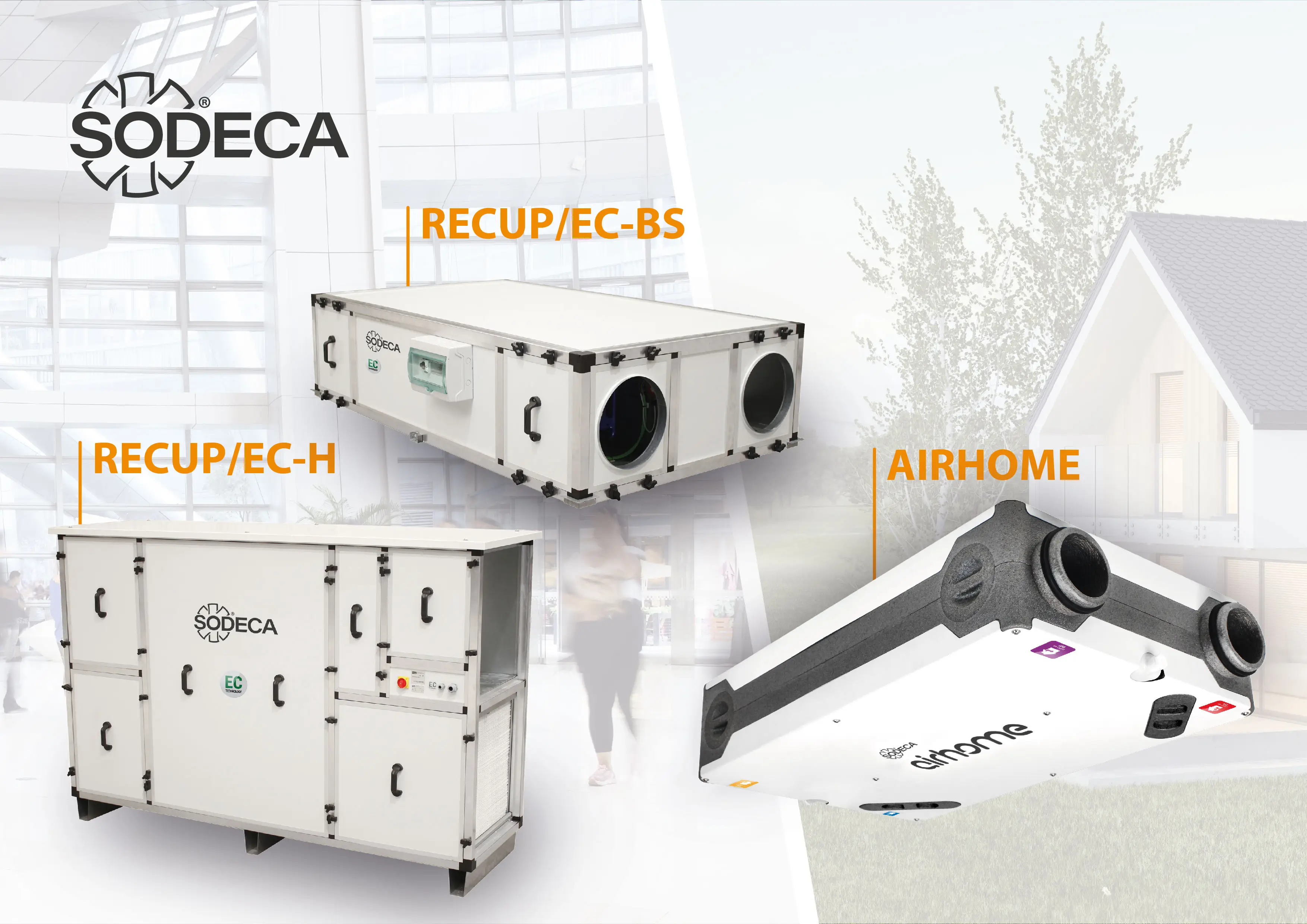
With this objective in mind, SODECA offers ventilation units with integrated filtration systems, such as the SV/FILTER/EC solutions, as well as heat recovery units that provide continuous indoor air renewal, such as the RECUP/EC range. These solutions improve indoor air quality without compromising the building’s energy efficiency. They also incorporate high-efficiency filtration systems, enabling ventilation to be adapted to the requirements of each installation.
Indoor air quality and energy efficiency
The guide also draws attention to current trends in building design, where increasingly airtight construction can lead to a deterioration in indoor environmental conditions if adequate air renewal rates are not maintained.
Energy efficiency and indoor air quality should therefore be addressed together through solutions capable of minimising energy losses during ventilation.
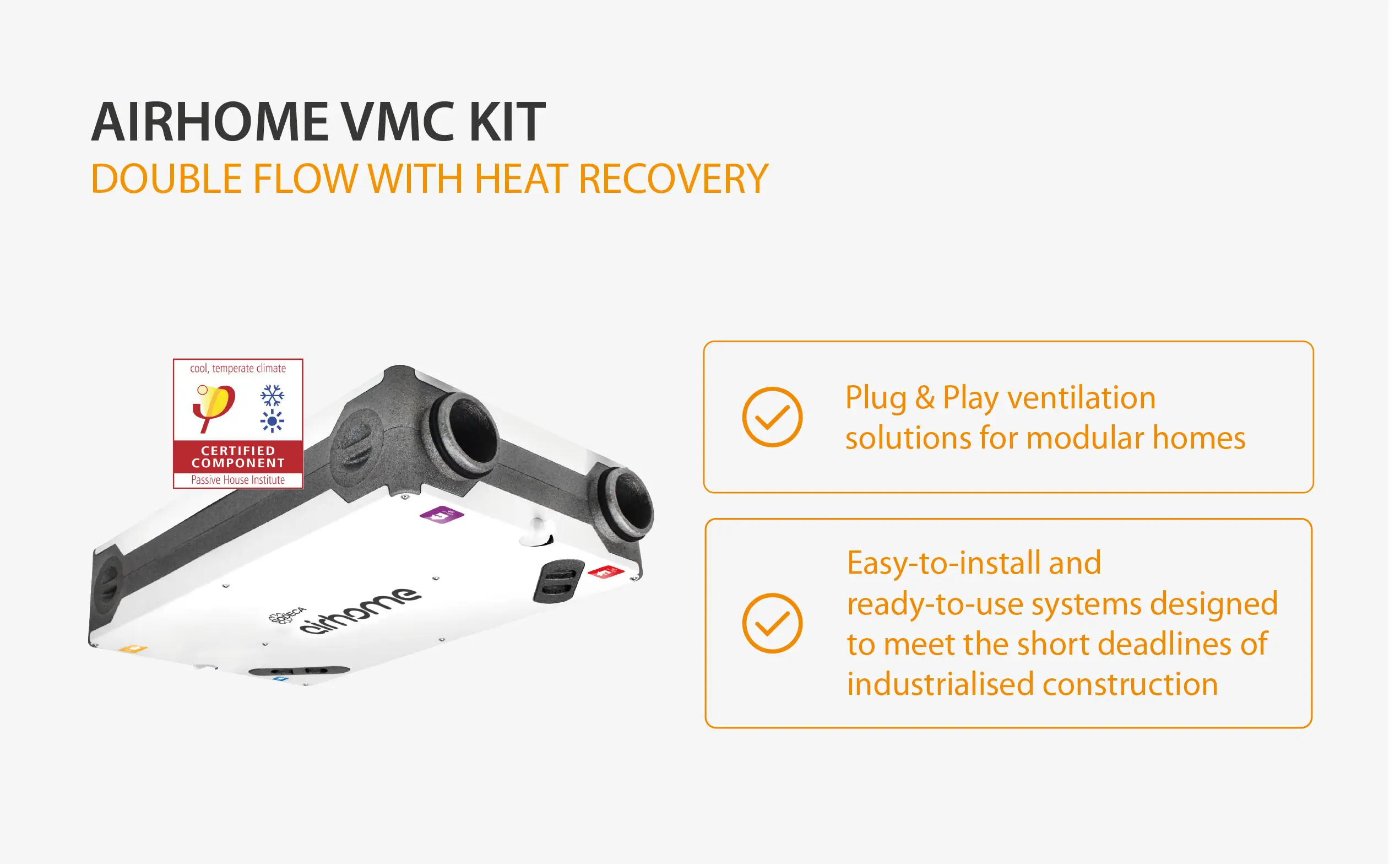
In this area, SODECA offers AIRHOME heat recovery units, Passivhaus-certified solutions designed to recover energy from extracted air and reduce the building’s energy demand.
In addition, the use of EC Technology motors in many SODECA ventilation solutions helps reduce electricity consumption, optimising system performance while maintaining effective ventilation. SODECA specifically uses EC Technology terminology for this range of high-efficiency ventilation equipment.
The importance of monitoring for pollutant control
Another key aspect highlighted by the guide is the continuous monitoring of indoor air quality. Sensors make it possible to monitor indoor environmental conditions in real time and adapt the operation of ventilation systems to the actual requirements of each space, improving both air quality and energy efficiency.
In this context, solutions equipped with CO₂ sensors can automatically regulate ventilation airflow according to occupancy and detected CO₂ levels, adapting ventilation to the actual demand of each space.
To meet this requirement, SODECA offers solutions such as the SV/FILTER-CO2 and SVE/PLUS-CO2 ranges. These ventilation units incorporate CO₂ sensors and control systems for demand-controlled ventilation and are designed to continuously maintain suitable indoor environmental conditions in homes and tertiary buildings.
Similarly, monitoring specific pollutants in certain applications is essential to protect people’s health. The guide recalls the requirement to monitor CO₂ levels and recommends monitoring NO₂ levels in car parks, as well as automatically activating ventilation systems when the limits established by applicable regulations are exceeded.
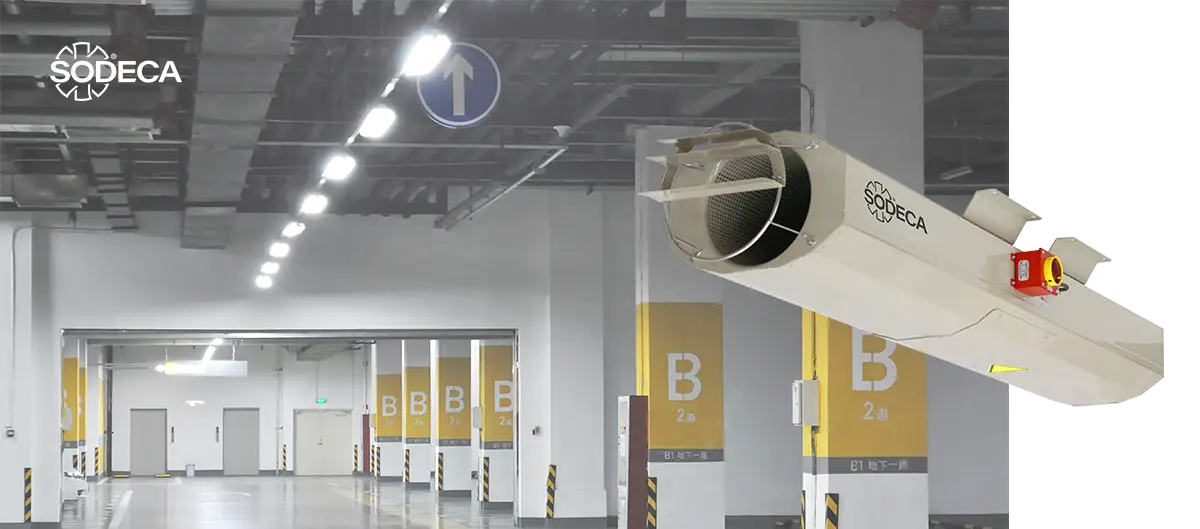
SODECA’s car park ventilation solutions incorporate continuous CO and NO₂ monitoring systems, automatic ventilation control and high-efficiency Jet Fan technology. These solutions help maintain safe conditions for users while enabling automatic management of car park ventilation and ensuring compliance with applicable regulations.
Ventilation for radon mitigation
The guide includes a specific section on radon, a naturally occurring pollutant that can accumulate inside buildings and for which the Spanish Technical Building Code (CTE HS6) establishes a reference level of 300 Bq/m³. Among the measures for reducing radon concentrations, the guide highlights the importance of ensuring adequate ventilation, particularly in areas in contact with the ground.
SODECA offers specific solutions for radon mitigation through extraction and ventilation systems adapted to the requirements of CTE HS6, helping to improve safety and indoor air quality.
The role of ventilation in reducing the presence of pollutants
Indoor air quality has become an essential consideration for health, well-being and building efficiency. Ventilation therefore plays a key role in reducing the presence of pollutants, adapting to the requirements of each space and meeting applicable regulatory requirements.
SODECA solutions help address these challenges through ventilation systems designed to improve indoor environmental quality, promote energy efficiency and meet the requirements of specific applications and regulations, including radon mitigation and car park ventilation.